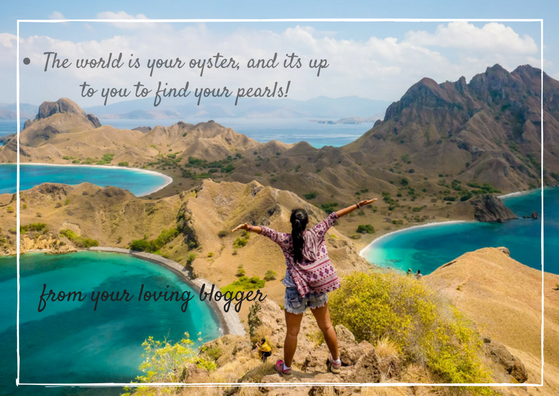
“Life is short, break the rules, forgive quickly, kiss slowly, love truly, laugh uncontrollably, and never regret anything that made you smile. Twenty years from now you will be more disappointed by the things you didn’t do than by the ones you did. So throw off the bowlines. Sail away from the safe harbor. Catch the trade winds in your sails. Explore. Dream. Discover.”
Here’s a video of the Tedx speech I gave back in 2011.
My name is Kounila Keo, and my readers call me @Kounila. And, the online world knows me as #blueladyblog
I am a co-founder of a communications agency, called Mekhala Radiant Communications CO LTD, which specializes in integrated marketing strategies, public relations, digital campaigns, and market research. With a background in local and international journalism, international development, and public policy, I have collaborated with international and local companies, government agencies, and non-government organizations to develop long-term integrated communications strategies across multiple countries. These campaigns aimed to take on various social issues, such as women and youth empowerment, civic engagement, maternity protection, early childhood development, environmental protection, and freedom of expression.
I hold a Bachelor’s degree in Media and Communications and a Master’s degree in Public Policy from the Lee Kuan Yew School of Public Policy, NUS Singapore (2016). I have joined communications and journalism fellowships in Asia, Africa, Europe, South America, and the USA. I was featured inForbes 30 Under 30 in 2017 in the media, advertising, and marketing category. In addition to my professional achievements, I have also delivered lectures at several universities, including MMC (Myanmar), LKYSPP/NUS (Singapore), NUM International College (Cambodia), and Cambodia Academy of Digital Technology (Cambodia).
Besides the skills described above, for a long period (between 2006 and 2017), I studied and practiced media and communication, news writing, multimedia production (video, audio, and photography), mass communication, public relations, and advertising. As fate would have it, I became a freelance reporter at the age of 18m and then for Agence France Presse and a freelance writer for the Phnom Penh Post, one of the most-read English news publications in Phnom Penh. I also switched across multiple international media publications: Agence France Presse, Los Angeles Times, IRIN UN News Agency, the Independent UK, CSMonitor, the Phnom Penh Post, Asia360s (Magazine), Global Voices Online, and more. I intensively trained on social media and gave speeches to, university students, artists, and professionals in Cambodia until I got a chance in October 2011 to be one of the 10 top UNESCO bloggers selected from a pool of nearly 600 applicants to cover the Paris UNESCO Youth Forum (2011) and chosen to be a social media trainer for Seliger Youth Forum in Russia in 2012 and was later blogger in chief for the same conference in 2013. With my networks, I was entrusted with the responsiblity to build a team, 3 from India, one from Mexico, one from Vietnam, and one from Nepal to cover the conference in Russia.
Social Initiatives and Events
NOW!
Currently, I’m running a boutique communications agency full-time, and my passion is to help my clients be successful in campaigns they run, be it social or commercial!
I can help you to:
- Connect your brand and create engagement with local bloggers and online influencers in Cambodia and the Southeast Asian region
- Plan a social media, community, and content strategy
- Plan and organize your Corporate Social Responsibility programs
- Organize writing/media relations/branding workshops
- Create content (blog posts, articles)
- help your company/organization with your mobile/web design, mobile app design (I have a team to do it)
- Be your writing coach, get your ideas into words and help edit your articles/books (Khmer & English)
- Be your mentor on setting up a business in Cambodia
- Do product review and sponsored posts on wheninphnompenh and @Kounila (Twitter/Instagram), especially on travel industry (hotels, tours, airlines, spas), beauty & fashion and technology & gadgets
- Support your collaboration and partnership in writing, publishing, community development, technology
- Organize social activities related to education & women specific topics especially on women in technology
- Do public speaking, hold seminars, and conferences around self-development, women empowerment, digital security, and digital publishing
Phnom Penh International Airport interviewed me and published this video on their website.
- blueladyblog[gmail].com
A bit more about me
I’m the fourth child of the five siblings and the only one that’s fortunate enough to have finished a Master’s degree (fully funded). I’m a Li Ka Shing scholar. Can’t thank my siblings enough for taking care of my parents when I was away for two years.
Education
I’m on:
- Google+
- Blueladyblog
- When in Phnom Penh
- Another WordPress
- Slideshare
- ASEAN reporters
- Youtube
- Flickr 1 & Flickr 2 (countries I’ve been to)
- PicasaWeb
Or Google me. Thank you very much.
Hi Kounila. I’m from Malaysia. I really impressed with your blog. You’re an absolutely good writer indeed and I really enjoying reading it. You makes me feel want to go to Cambodia even as I write this comment. Bookmarked u r blog and hope to read more form it. Btw, care to link xchange? I’m looking for partner to promote my blog and yours is just what I’m looking for. Have a great day. Happy New Year 2013.
hi Kounila,
i am happy to read your blog. It shows me that a new generation of khmer is growing up that did not have to endure the hardship of the older generation. Traveling will open open your mind, it did it to me almost 45 years ago. It’s that long that i am travelling (well, if i have some free time from work). It made me more tolerant and interested in other cultures and people, their thoughts, music, food and living. I am orig. from Germany but Cambodia is my home since over 10 years. I learned more here than in many decades of my life before that. For example that “less is more” and to be moderate in everything will help you through life. Foreigners can be good and bad for Cambodia. I have seen them all. But i also have seen Foreigners that came here as really bad people, married a khmer woman and got a child and than changed completely to a good person. This is the proof that your culture works. Many western people and NGO in particular critizise the khmer chbab srey rules for women and girls. In my culture we had similar rules until people got more rich, greedy and had no respect for each other anymore. That’s when most of the western societies collapsed and individual egoism became the new standard. In Cambodia your Family is your social net where you can go back to if in trouble or just sad. If you follow the western egoism individualism you won’t have that anymore. So preserve it as much as you can. It’s a treasure.
Foreign NGO People will tell you that Chbab srey is bad and a source for domestic violence. I don’t believe this because when i see my khmer neighbours it’s usually the women that are much stronger in the family. It’s only when men go on drinking tours and want to be bigger than themselfs they don’t seem to be able to control themself anymore. Sometimes it is smarter to just be quiet and let the alcohol disappear. The next day your family is still intact but if you follow western (stupid) guidelines of feminin extremists than your family will never again be able to life a happy life together anymore.
Keep well and good luck to your work and dreams
I was interested in creating blog, but I recently was so busy. I have created a blog, but it was not good enough. When i see you blog, I am inspired by you. I will try to create a new blog.
Hi, kounila!! I am a 17 years old Cambodian girl who has just watched your awesome presentation about blogging on teacher Sharmani’s moodle.Honestly, you looked so confident in presenting which I like the most out of you. Also, i actually cannot imagine how a young girl like you started something interesting like that( I mean blogging).. As I have noticed some of your interesting activities I have followed you on twitter. You inspire me to speak english better and with more confidence.You make me wanna do something bright like you. I hope to see you sharing more of your interesting experience with many other Cambodians especially me. I wish you the best, Kounila!!! I promise we all have to try our best to do something for our country.
Hi Kounila Keo, my name is Nin, I am a blogger in http://www.kingdomofcambodian.com, I have recently visit your blog post and it has inspire me. I just started to blog and not creative as yours and other Cambodian blogger.
I admire in what you do! I hope that you may successful in the near future, hope all other Cambodian Blogger will be successful too, I think we all have the same dream, to help Cambodia be known around the world more.
Hi Nila,
Nice to hear from you by visiting your blog accidentally, I once share the class with,but not sure whether it is at IFL or High school, and glad that you have found your passion and achieve the success in life.
Thanks, Virak. We were high school mates. Thanks for remembering me. I remember you very well. And, again thanks for visiting my blog!
I really passionate on blogging and do it for my free time , but my blog are related to technology 🙂
Hi Kounila Keo,
I read your posts and watched your videos with great interest, they are very informative and helpful.
My name is Richard Currie and I am the production coordinator at Cambodian Productions in Phnom Penh. We are a western run production company operating within the Kingdom of Wonder. Cambodian Productions can help with all aspects of film production from permits to logistics and sourcing local crew. I also write posts about film making in Cambodia, I would love to get your feed back. Our email is [email protected] or we can be contacted directly via telephone +855 (0)78 572 466.
http://www.cambodianproductions.com
Thank you and keep up the good work.
Regards Richard
Hi Kounila,
I live and work in Papua New Guinea and I just literally started to blog and my first post was published an hour ago. I think its amazing what you do and I look forward to reading more of your blogs.
cheers
Samantha
Wow! you’re a professional blogger!
Ha, I’m just a blogger!
Hello Kounila,
I have sent you an email to ‘[email protected]’ can you please check?
Thanks
Hi Celine,
I haven’t received it. Could you please send it again?
Hello Kounila
I’m Pascale from the BBC in London. I would like to speak to you about a programme we’re planning to record in Cambodia. Could you send me your email please?
Thanks
Pascale